
Data sovereignty is defined as the principle that data is subject to the laws and governance of the jurisdiction in which it is collected, stored, and processed. For hotels, this is not an abstract concept. Every reservation, payment record, and guest preference profile represents personally identifiable information that regulators, courts, and increasingly guests themselves expect to be protected under clear legal authority. 70% of global leaders now demand sovereign data and AI platforms for future business success. That figure signals a fundamental shift: data sovereignty for hotels is no longer optional infrastructure planning. It is a core business obligation.
Why hotels need data sovereignty: the legal and compliance case
Hotels operate as data controllers under frameworks such as the General Data Protection Regulation (GDPR) and Jamaica's Data Protection Act 2020. That classification carries direct legal accountability for every piece of guest data processed, regardless of which cloud provider stores it.
The regulatory environment tightened considerably in september 2025 when the EU Data Act came into force, mandating interoperability and fair access to data generated by connected hotel systems. The Act empowers hotels to retrieve data from property management systems, smart room devices, and booking platforms in open, machine-readable formats without vendor obstruction. Hotels that have not audited their technology contracts for compliance with this mandate face both regulatory exposure and commercial disadvantage.
The obligations do not stop at data access. Under GDPR, hotels must conduct Data Protection Impact Assessments (DPIAs) before deploying high-risk processing activities, practise data minimisation, and maintain documented oversight of every processor in their supply chain. Non-compliance carries fines of up to 4% of global annual turnover under GDPR Article 83. Reputational damage from a publicised breach compounds that financial exposure significantly.
- DPIAs: Required before processing activities that present a high risk to guest rights, such as behavioural profiling or large-scale loyalty analytics.
- Processor oversight: Hotels must audit third-party vendors, including cloud providers, to confirm they meet the same data protection standards the hotel itself is bound by.
- Cross-border transfer controls: Sending guest data to servers outside the European Economic Area or Jamaica requires specific legal mechanisms such as Standard Contractual Clauses.
- Data minimisation: Hotels should collect only the guest data strictly necessary for the stated purpose and delete it once that purpose is fulfilled.
- Breach notification: GDPR requires notification to the supervisory authority within 72 hours of discovering a personal data breach.
Pro Tip: Review every data processing agreement with your cloud and property management vendors annually. Regulations change, and a contract signed in 2022 may not reflect the obligations introduced by the EU Data Act in 2025.
What are the operational benefits of sovereign data infrastructure for hotels?
The importance of data sovereignty extends well beyond legal compliance. Sovereign data infrastructure produces measurable operational gains that directly affect revenue and resilience.
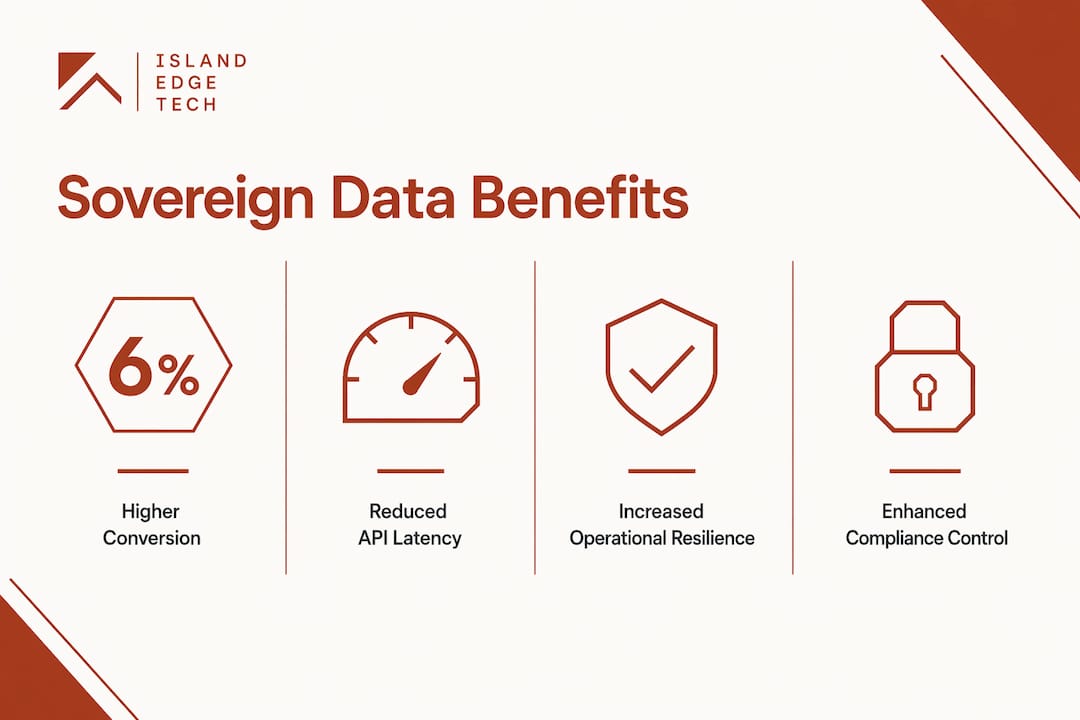
Hosting personally identifiable information in sovereign clouds improves booking conversion rates by 6% and reduces API latency to under 120 ms. Faster response times at the booking engine translate directly into completed reservations rather than abandoned sessions. For a mid-scale hotel group processing thousands of online bookings per month, that conversion improvement represents material revenue.

Operational resilience is the second major gain. Over-reliance on offshore cloud providers introduces systemic risks including political interference and economic dependency. A hotel whose guest database sits on servers subject to a foreign government's legal reach can face operational disruption without warning. Sovereign or locally hosted infrastructure removes that exposure. Islandedgetech's EdgePod infrastructure addresses precisely this risk by keeping data and processing on Jamaican soil, under Jamaican law, and outside the reach of instruments such as the US CLOUD Act.
| Benefit | Mechanism | Practical impact |
|---|---|---|
| Reduced API latency | Data processed closer to the point of origin | Booking conversion rates improve by up to 6% |
| Regulatory compliance | Data stored within the governing jurisdiction | Avoids cross-border transfer restrictions under GDPR |
| Operational resilience | No dependency on offshore infrastructure | Eliminates exposure to foreign legal orders and outages |
| Vendor independence | EU Data Act interoperability rights | Hotels can switch providers without data loss |
| Cost predictability | Reduced cross-region egress fees | Clearer cloud spending with regional architecture |
Pro Tip: Model your egress costs before committing to a multi-region architecture. Cross-region replication and egress fees can significantly inflate cloud spending when sovereign regions carry a 5–10% price premium over standard tiers.
What misconceptions do hotels have about data sovereignty?
The most dangerous misconception in hospitality data management is that using a sovereign cloud automatically satisfies GDPR or national privacy law obligations. Sovereign clouds reduce cross-border legal risks but do not eliminate the hotel's responsibilities as data controller. The hotel remains accountable for DPIAs, processor audits, and data subject rights regardless of where the server sits.
A second misconception concerns legacy contracts. Hotels frequently face liabilities from management agreements that predate modern privacy laws and contain no clear clauses on data ownership, access rights, or deletion obligations. A hotel operating under a franchise or management contract signed before 2018 may find that the franchisor or operator holds effective control over guest data without any legal basis under current law. Contract renegotiation is a risk management step, not a discretionary upgrade.
Additional misconceptions that create compliance gaps include:
- Sovereignty equals immunity: Storing data locally does not protect a hotel from enforcement action if its internal processing practices breach data protection law.
- Cloud provider compliance transfers to the hotel: A provider's ISO 27001 certification or GDPR attestation covers the provider's own operations, not the hotel's data processing decisions.
- Hybrid cloud is always more expensive: A well-designed hybrid architecture, using sovereign regional storage for sensitive guest data and centralised regions for anonymised analytics, can contain costs while meeting compliance requirements.
- Data portability is automatic: The EU Data Act grants portability rights, but hotels must actively configure their systems to produce data in open, interoperable formats. The right does not implement itself.
How do hotels establish data sovereignty effectively?
Effective data sovereignty for hotels requires a structured approach that combines legal review, technical architecture, and ongoing governance. The following steps reflect current best practice under GDPR, the EU Data Act, and Jamaica's Data Protection Act 2020.
-
Conduct a data mapping exercise. Identify every category of guest data collected, where it is stored, who processes it, and under which legal basis. This forms the foundation for all subsequent compliance work and is a prerequisite for any DPIA.
-
Review and renegotiate contracts. Audit management agreements, franchise contracts, and technology vendor agreements for data ownership clauses. Legacy contracts lacking clear data control provisions expose hotels to liability. Renegotiate to assign explicit data controller status and deletion obligations.
-
Adopt a layered architecture. Combine sovereign regional storage for sensitive data with centralised regions for analytics. This hybrid model balances the 5–10% sovereign cloud price premium against compliance requirements and performance needs.
-
Implement customer-managed encryption keys (CMKs). CMKs give the hotel cryptographic control over its data independent of the cloud provider. Even if a provider receives a foreign legal order, encrypted data without the hotel's key is operationally inaccessible.
-
Apply a zero-trust security model. Zero-trust architecture requires every user, device, and system to authenticate before accessing data. This limits the blast radius of any breach and supports the data minimisation principle under GDPR.
-
Establish a DPIA schedule. Conduct DPIAs before deploying new processing activities and review existing ones annually. Document findings and remediation actions to demonstrate accountability to supervisory authorities.
-
Verify EU Data Act interoperability compliance. Confirm that property management systems, booking engines, and connected room technology can export data in open formats. Hotels have the right to access this data without vendor obstruction since september 2025.
Pro Tip: Appoint a Data Protection Officer or engage a specialist adviser before beginning contract renegotiations. The digital sovereignty frameworks now available provide structured templates that reduce the time and cost of this process considerably.
Key takeaways
Hotels that treat data sovereignty as a legal and operational priority gain compliance certainty, measurable performance improvements, and protection against the systemic risks of offshore data dependency.
| Point | Details |
|---|---|
| Hotels are data controllers | Legal accountability for guest data rests with the hotel, not the cloud provider. |
| Sovereign cloud is not a compliance shortcut | DPIAs, processor audits, and data minimisation remain the hotel's direct obligation. |
| Latency and conversion gains are real | Sovereign cloud hosting can improve booking conversion by 6% through reduced API latency. |
| Legacy contracts create hidden liability | Management and franchise agreements must be reviewed and updated for modern privacy law. |
| Layered architecture balances cost and compliance | Combining sovereign regional storage with centralised analytics manages the 5–10% premium effectively. |
Data sovereignty is a strategic asset, not an IT checkbox
The hotels I have observed struggle most with data sovereignty share a common pattern: they treat it as an IT procurement decision rather than a board-level strategic question. That framing is the root of the problem.
Guest data is now a hotel's most valuable intellectual property. Loyalty profiles, behavioural patterns, and revenue data inform pricing, staffing, and capital allocation. When a hotel cedes control of that data to an offshore provider operating under foreign law, it does not just accept a compliance risk. It surrenders competitive intelligence to a third party whose interests may not align with the hotel's own.
Data sovereignty is evolving from a residency concern into a question of who controls the intellectual property that drives competitive advantage. The hotels that understand this earliest will build data architectures that serve them for decades. Those that wait for a regulatory enforcement action or a vendor dispute to force the issue will pay considerably more, in legal fees, in contract penalties, and in lost guest trust.
The discipline required is not purely technical. It demands that legal, operations, and technology teams work from a shared understanding of what the hotel owns, where it lives, and who can access it. That coordination is harder than deploying a sovereign cloud instance. It is also the only part of the process that actually protects the business.
— Michael
Islandedgetech's sovereign cloud solutions for hotels
Hotels operating in Jamaica and the wider Caribbean face a specific version of this challenge. Foreign cloud providers subject to US law, including the CLOUD Act, can be compelled to disclose guest data regardless of where it is physically stored. That exposure is not theoretical.
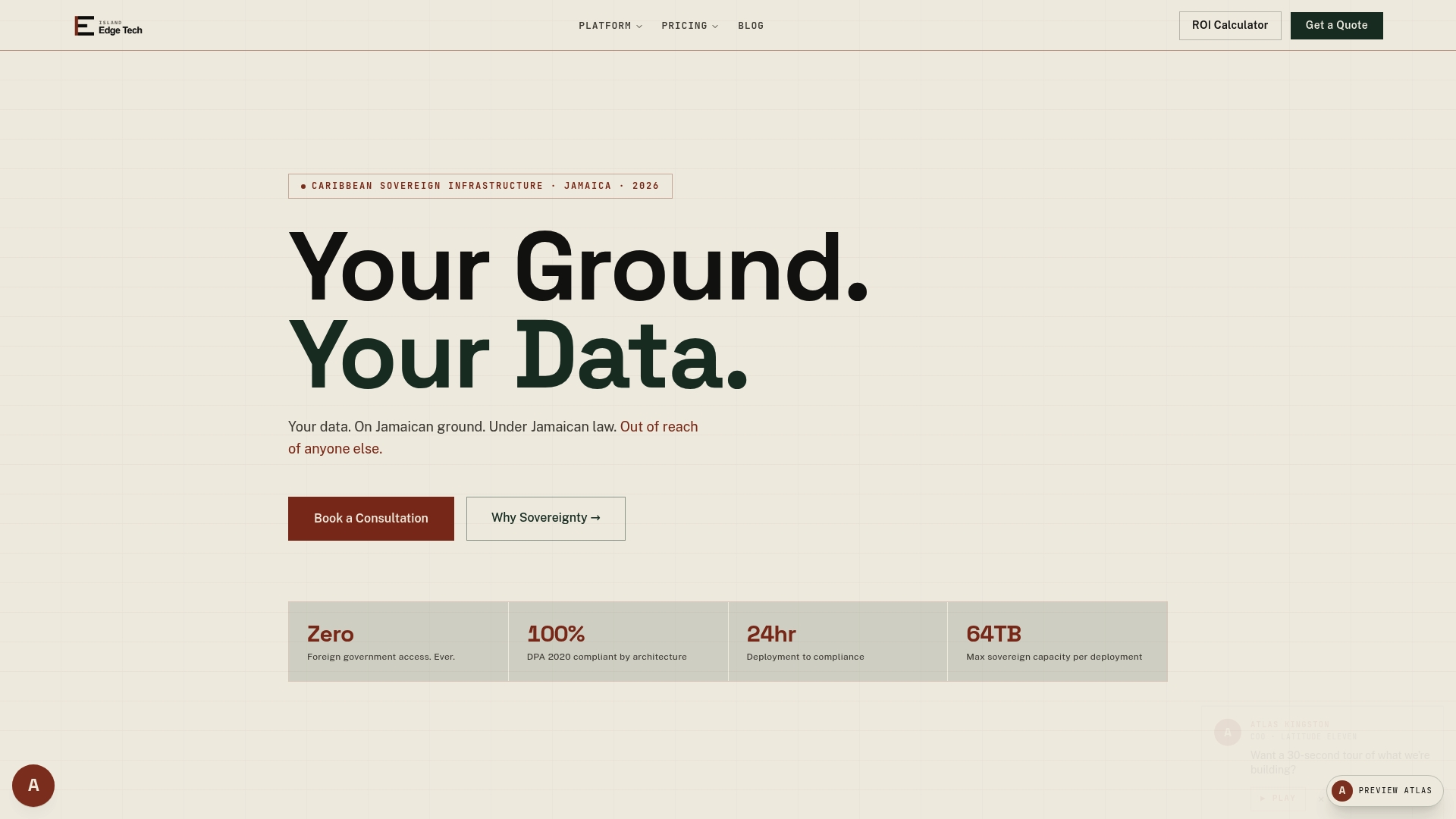
Islandedgetech's sovereign cloud infrastructure keeps hotel data on Jamaican soil, under Jamaican law, and fully aligned with the Data Protection Act 2020. Products including EdgePod provide the technical foundation for data residency, while the Abeng work suite supports sovereign productivity across hotel operations. Hotels working with Islandedgetech gain a compliance-ready environment without the legal ambiguity of offshore hosting. Contact Islandedgetech to discuss a sovereign infrastructure assessment tailored to your property's data environment.
FAQ
What is data sovereignty for hotels?
Data sovereignty for hotels is the principle that guest data must be stored and processed under the legal jurisdiction where it originates. It determines which laws govern access, deletion, and cross-border transfer of that data.
Does using a sovereign cloud make a hotel GDPR-compliant?
No. Sovereign clouds reduce cross-border legal risks but do not replace the hotel's obligations as data controller. DPIAs, data minimisation, and processor oversight remain the hotel's direct responsibility.
What does the EU Data Act require from hotels?
The EU Data Act, in force since september 2025, requires hotels to access data from connected systems in open, interoperable formats and prohibits vendors from obstructing that access.
Why do legacy hotel contracts create data sovereignty risks?
Management and franchise agreements signed before modern privacy laws often contain no clear data ownership or deletion clauses. This leaves the hotel legally exposed when regulators or guests exercise data rights.
How does Islandedgetech support hotel data sovereignty in Jamaica?
Islandedgetech provides sovereign cloud infrastructure that stores hotel data on Jamaican soil under the Data Protection Act 2020, eliminating exposure to foreign legal instruments such as the US CLOUD Act.