
What is a sovereign data pod?
A sovereign data pod is a secure, user-controlled data storage system built on W3C Solid open standards, designed to physically and legally anchor data within a specific jurisdiction. Unlike conventional cloud storage, a sovereign data pod separates data storage from the applications that consume it, giving organisations direct, enforceable control over who accesses their data, under which legal framework, and on what terms.
For UK organisations, this distinction carries significant legal weight. Under the UK GDPR and the Data Protection Act 2018, personal data must be stored and processed under UK jurisdiction, with demonstrable controls over cross-border transfers. A sovereign data pod satisfies these requirements by design, not as an afterthought.
The core functional attributes of a sovereign data pod include:
- Jurisdictional anchoring: Data resides on infrastructure within a defined legal territory, subject to that territory's laws.
- Access control: Resource-level permissions via Web Access Control (WAC) determine precisely which parties can read, write, or share specific data assets.
- Encryption: Data is protected in transit using HTTPS/TLS 1.2+ and at rest using AES-256 encryption, with access governed by cryptographically-signed tokens.
- Consent-based sharing: Organisations grant and revoke data access on a per-resource basis, creating an auditable consent trail.
- Portability: Because storage is decoupled from applications, data can migrate between services without loss of control or compliance standing.
- Multiple pods per entity: A single organisation can maintain separate pods for different data types, departments, or regulatory categories, each with distinct access patterns.
Government-issued or issuer-certified documents can be housed within a pod in a form the holder can share but not alter, which is particularly relevant for regulated sectors handling official records.
Table of Contents
- How sovereign data pods support UK data sovereignty and compliance
- Why sovereign data pods are a strategic asset for UK organisations
- Implementing sovereign data pods: what UK organisations need to know
- Islandedgetech's sovereign data infrastructure for organisations that cannot afford to wait
- Key takeaways
How sovereign data pods support UK data sovereignty and compliance
Data sovereignty, in its legal and operational sense, means that data is governed by the laws of the jurisdiction in which it physically resides. For UK organisations, this translates directly to obligations under UK GDPR and the Data Protection Act 2018: personal and sensitive data must remain under UK legal jurisdiction, with documented controls over any cross-border transfer.

Sovereign data pods operationalise this principle at the infrastructure level. Rather than relying on contractual assurances from a foreign cloud provider, the data controller retains direct, verifiable authority over storage location, access rights, and processing conditions. The ICO's guidance on data residency is unambiguous: lawful data residency is not optional for sectors such as healthcare, finance, and government services.
Key compliance dimensions that sovereign data pods address:
- Cross-border transfer risk: Data stored within a sovereign pod does not traverse foreign jurisdictions unless the data controller explicitly authorises it, eliminating inadvertent exposure to extraterritorial laws.
- Foreign jurisdiction reach: Organisations using US-headquartered cloud providers remain potentially subject to legislation such as the CLOUD Act, which can compel disclosure of data regardless of its physical location. Sovereign pods remove this exposure.
- Vendor lock-in: Proprietary cloud architectures can trap data in formats or locations that complicate compliance audits. The open-standards architecture of sovereign pods preserves portability and auditability.
- Cyberattack surface reduction: Isolated, encrypted pod storage limits lateral movement in the event of a breach, reducing the blast radius for a data controller.
- Access logs and permission audits: Sovereign pods generate verifiable records of who accessed what and when, directly supporting the accountability principle under UK GDPR Article 5(2).
Data sovereignty is increasingly defined not merely as a compliance posture but as self-determination over data products, encompassing both data ownership and data control as distinct, measurable facets.
Why sovereign data pods are a strategic asset for UK organisations
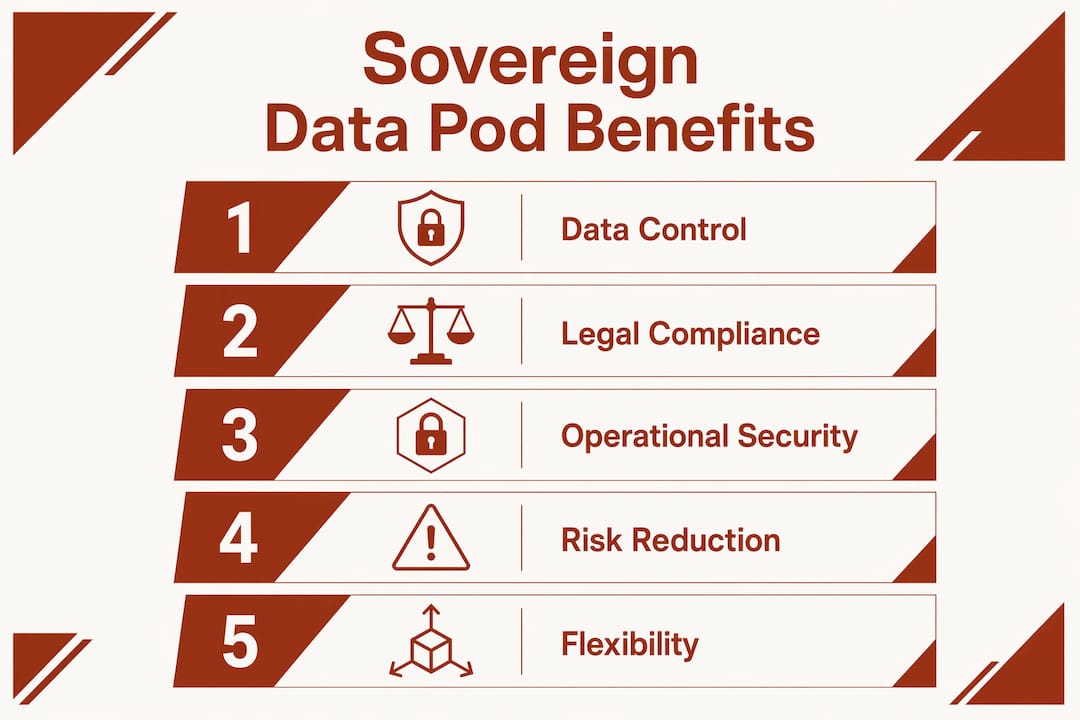
Compliance is the floor, not the ceiling. Organisations that treat sovereign data management purely as a regulatory obligation miss the broader strategic value: the ability to retain decision rights over data when the external environment becomes unpredictable.
As CDO Magazine's analysis articulates, the greatest organisational risk lies not in a single breach but in the gradual, opaque loss of strategic manoeuvrability caused by unchecked vendor dependencies. An organisation can be fully compliant with UK GDPR, certified against ISO 27001, and still be structurally dependent on infrastructure decisions made in another country.
Sovereign data pods address this directly:
- Vendor negotiation leverage: Decoupling data from proprietary storage gives organisations genuine switching power, which materially improves contractual terms with technology providers.
- Operational continuity: When a cloud provider experiences an outage or exits a market, organisations with sovereign pods maintain uninterrupted access to their own data.
- Consumer and partner trust: Consent-driven, fine-grained data sharing increases transparency in digital relationships. Organisations that can demonstrate verifiable sovereignty over data attract partners and clients who require it as a condition of engagement.
- AI and analytics independence: As organisations build AI workloads on their data, sovereign storage prevents training data and model outputs from being absorbed into a provider's proprietary ecosystem.
- Supply chain resilience: Geopolitical disruption, trade disputes, and regulatory divergence between jurisdictions can all affect data access. Sovereign pods insulate organisations from these external shocks.
Adopting sovereign data strategies as a risk management discipline enhances resilience, consumer trust, and flexibility in vendor negotiations. Sovereignty, properly understood, is about retaining the power to choose, not about isolation from global technology.
Pro Tip: Map your organisation's current data dependencies across cloud, software, and AI systems before selecting a sovereign pod architecture. Organisations that skip this dependency audit often replicate the same lock-in risks in a new wrapper.
Implementing sovereign data pods: what UK organisations need to know
Deploying a sovereign data pod is an architectural and governance commitment, not a product purchase. UK organisations should approach implementation across four dimensions.
Technical architecture
A compliant sovereign pod implementation requires: Solid-compatible pod servers with resource-level WAC permissions; AES-256 encryption at rest and TLS 1.2+ in transit; cryptographically-signed access tokens; and local infrastructure physically located within the UK. Organisations in regulated sectors such as financial services, healthcare, and public administration should additionally consider data vaulting, where isolated, protected copies support resilient recovery.
Data residency and local infrastructure
UK GDPR requires that personal data processed under UK law remains subject to UK jurisdiction. This means the physical servers hosting sovereign pods must be located in the UK, operated under UK-governed contracts, and auditable by the data controller without reliance on a foreign parent entity. Cloud-hosted pods with UK data centre options do not automatically satisfy this requirement if the provider's parent company is subject to foreign extraterritorial legislation.
Governance and ongoing compliance
Sovereignty is not a one-time configuration. Organisations must establish:
- Defined data stewardship roles with documented accountability for each pod.
- Regular permission audits to verify that access controls reflect current consent and contractual status.
- Metadata and lineage management so that data flows remain visible across the organisation.
- A compliance monitoring schedule aligned with ICO reporting obligations and any sector-specific requirements.
Challenges to anticipate
Technological lock-in does not disappear with sovereign pods; it shifts. Organisations must map dependencies across cloud, software, and AI systems to build genuine switching power. Integration complexity is a real barrier, particularly for legacy systems that were not designed to interact with Solid-compatible APIs. Organisational readiness, including staff training and governance culture, is frequently the longest lead-time item in any sovereign data programme.
Future regulatory expectations are also moving in one direction. The ICO's evolving guidance on international data transfers and the UK's post-Brexit data adequacy framework both point towards tighter requirements for demonstrable, auditable data residency. Organisations that build sovereign pod infrastructure now will be better positioned to meet those requirements without disruptive remediation.
Islandedgetech's sovereign data infrastructure for organisations that cannot afford to wait
For organisations that have read this far and recognise the compliance gap between their current cloud arrangements and what UK data law actually requires, Islandedgetech offers a direct path to verified sovereign data control.
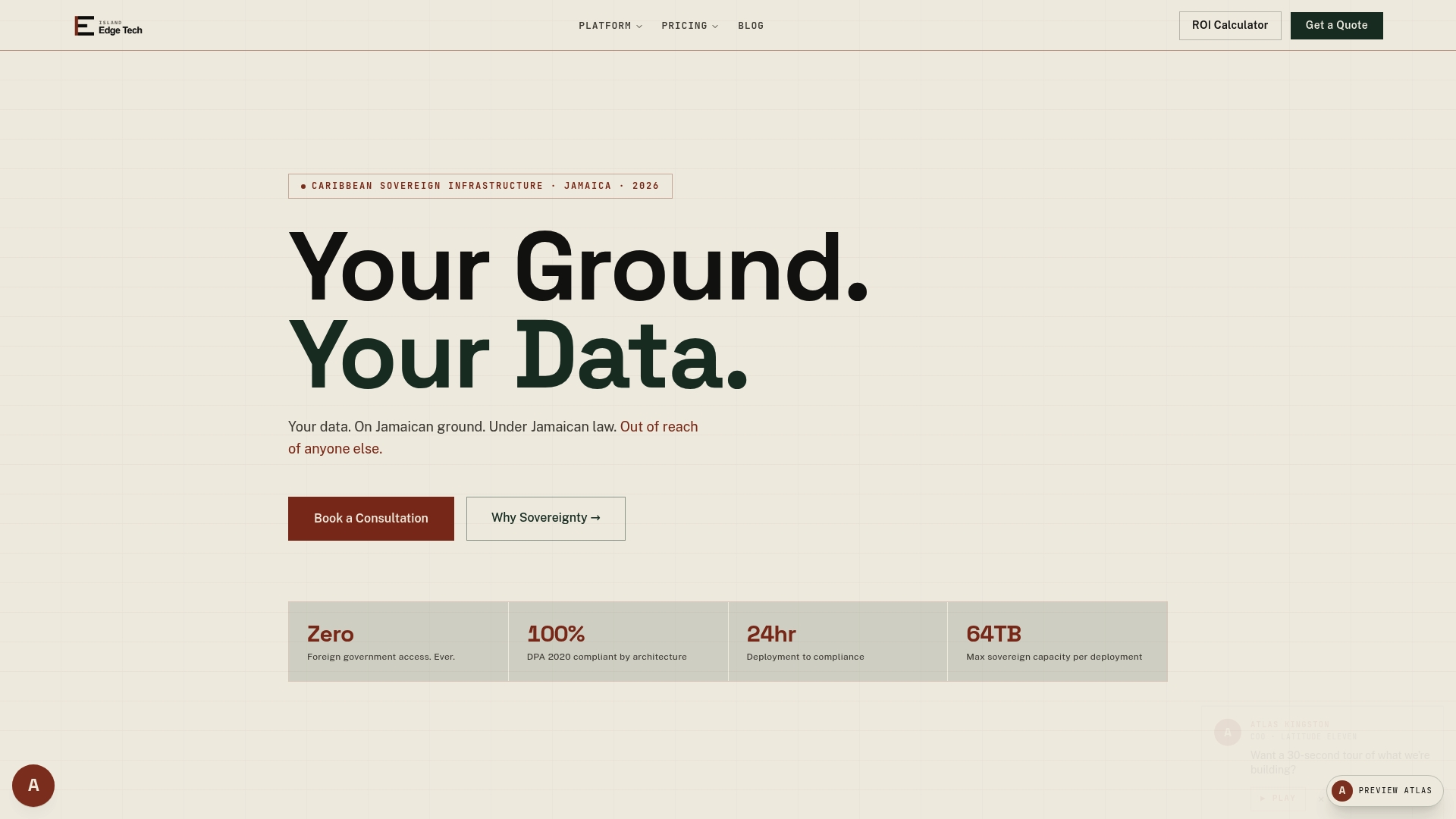
Islandedgetech's EdgePod is a proprietary sovereign data pod built for organisations that need data residency on local soil, under local law, with no exposure to foreign extraterritorial legislation such as the US CLOUD Act. Unlike a standard cloud migration, EdgePod decouples your data from vendor-controlled infrastructure, giving your organisation genuine switching power, auditable access logs, and compliance-ready architecture from day one. The sovereign cloud platform is designed for sectors where data sovereignty is not a preference but a legal and operational necessity. Contact Islandedgetech to assess your current data residency posture and begin your compliance roadmap.
Key takeaways
Sovereign data pods give UK organisations verifiable, jurisdiction-anchored control over personal and sensitive data, satisfying UK GDPR obligations while eliminating the strategic risks of opaque vendor dependency.
| Point | Details |
|---|---|
| Definition of a sovereign data pod | A secure, Solid-standard storage system that anchors data within a specific legal jurisdiction with consent-based access controls. |
| UK compliance foundation | UK GDPR and the Data Protection Act 2018 require personal data to be stored and processed under UK jurisdiction with auditable controls. |
| Strategic risk management | Decoupling data from vendors reduces single points of failure, improves continuity, and preserves organisational decision rights. |
| Implementation priorities | Technical architecture, local infrastructure, governance policies, and dependency mapping are all required, not optional, components. |
| Islandedgetech EdgePod | Islandedgetech's EdgePod provides sovereign data pod infrastructure with local residency, CLOUD Act immunity, and compliance-ready architecture. |