
Data protection in healthcare is defined as the practice of securing patients' sensitive health information to uphold privacy, satisfy regulatory obligations, and preserve the integrity and availability of clinical data. The role of data protection in healthcare extends well beyond technical compliance. It determines whether patients trust their providers, whether organisations avoid crippling financial penalties, and whether health systems can operate without interruption. By the end of 2025, 375 million individuals had been affected by US health data breaches. That figure makes the urgency of structured data governance impossible to ignore.
What are the main healthcare data protection regulations and standards?
Healthcare data protection sits at the intersection of multiple legal frameworks, and understanding each one is the first step in building a credible compliance programme.
HIPAA (the Health Insurance Portability and Accountability Act) remains the primary federal standard in the United States. Its three core rules govern how protected health information is handled:
- The Privacy Rule defines what constitutes protected health information and limits its use and disclosure without patient authorisation.
- The Security Rule mandates administrative, physical, and technical safeguards for electronic health records. Updated standards effective in 2026 now require 72-hour incident reporting and enhanced security controls across all covered entities.
- The Breach Notification Rule compels covered entities to notify affected individuals, the Department of Health and Human Services, and, in some cases, the media following a qualifying breach.
Federal regulators collected over £6.6 million in HIPAA settlement fines during 2025. That enforcement trend signals that regulators are moving from guidance to prosecution.
GDPR (the General Data Protection Regulation) applies to any organisation processing the personal data of individuals in the European Economic Area, regardless of where the organisation is based. For healthcare administrators managing cross-border patient data or international research collaborations, GDPR obligations layer directly on top of HIPAA requirements.

Healthcare organisations commonly operate under at least six overlapping regulatory frameworks simultaneously, including HIPAA, CMS rules, FDA regulations, state privacy laws, and accreditation standards. That overlap creates duplication and gaps unless organisations build a unified governance structure. Breach notification timelines and penalties vary by state, and some states grant patients a private right of action that HIPAA does not. This means a single breach can trigger federal enforcement, state regulatory action, and civil litigation at the same time.
Jamaica's Data Protection Act 2020 (DPA 2020) adds a further layer for Caribbean healthcare providers. It establishes obligations for data controllers and processors, restricts cross-border transfers of personal data, and requires proportionate security measures aligned with the sensitivity of the data held.
How do technical and organisational strategies ensure data security in healthcare?
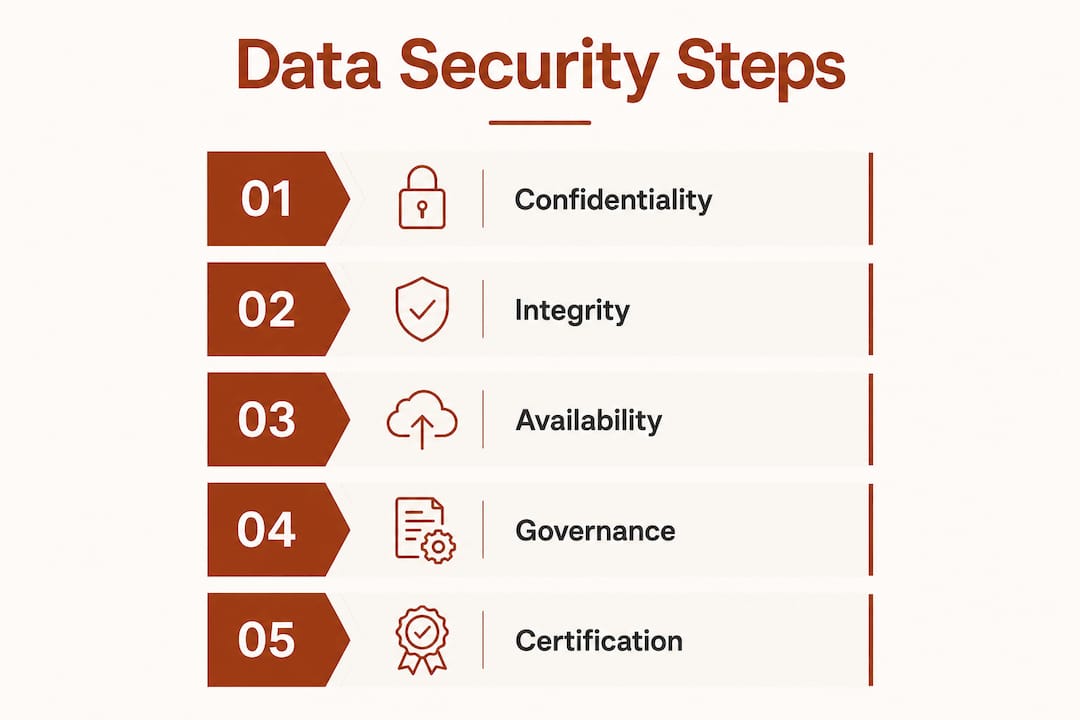
Effective data security in healthcare rests on the CIA triad: confidentiality, integrity, and availability. Confidentiality prevents unauthorised access to patient records. Integrity ensures that data is accurate and has not been altered without authorisation. Availability guarantees that clinicians and administrators can access the data they need, when they need it.
Technical safeguards
The following technical controls form the baseline for any credible healthcare data protection programme:
- Encryption: All data at rest and in transit must be encrypted using current standards. Unencrypted laptops and removable media remain a leading cause of reportable breaches.
- Multi-factor authentication (MFA): MFA prevents credential theft from granting immediate access to clinical systems. It is now a standard requirement under updated HIPAA Security Rule guidance.
- Access controls and least privilege: Staff should access only the data their role requires. Least privilege access limits the damage a compromised account can cause.
- Audit logging: Comprehensive logs of who accessed what data, and when, are mandatory for breach investigation and regulatory audit readiness.
- Context-aware protection: Security now demands context-aware controls that prevent lateral breaches across hybrid cloud and edge device environments. Static firewalls are no longer sufficient when data moves across dispersed systems.
Administrative and governance controls
Technical safeguards fail without supporting governance. Healthcare organisations must maintain written policies covering data classification, acceptable use, and incident response. Employee training is not optional. Staff who cannot recognise a phishing attempt or understand their obligations as data processors represent a material compliance risk.
Pro Tip: The most common oversight in securing healthcare data is not a missing technical control. It is the absence of a tested incident response plan. Organisations that have never rehearsed a breach response consistently take longer to contain incidents, which directly increases regulatory exposure and patient harm.
SOC 2 certification is increasingly required by healthcare enterprise contracts. Achieving it signals that an organisation's security controls have been independently verified, which accelerates procurement decisions and reduces the due diligence burden on both sides of a contract.
What emerging challenges and innovations affect healthcare data protection?
The threat environment facing healthcare data has changed materially in the past three years. Ransomware attacks now target clinical systems specifically because the urgency of patient care creates pressure to pay ransoms quickly. AI integration introduces new categories of risk that existing regulatory frameworks were not designed to address.
- AI and machine learning: AI models trained on patient data can inadvertently expose individual records through model inversion attacks. Governance frameworks must address how training data is selected, anonymised, and retained.
- Federated learning: Federated learning and synthetic data allow healthcare organisations to train AI models across multiple institutions without centralising raw patient data. This reduces privacy risk during model development without sacrificing analytical quality.
- Synthetic data: Statistically representative datasets generated from real patient records allow researchers and developers to work without accessing identifiable information. Adoption is growing in clinical trial design and health system modelling.
- Algorithmic bias: Health data governance must address ethical challenges that extend beyond individual privacy.
Privacy protections alone are insufficient. Governance must also address collective harms and algorithmic bias, particularly when AI systems trained on historically unrepresentative datasets produce clinical recommendations that disadvantage specific patient populations. The 2026 regulatory updates begin to address these concerns, but the gap between technical capability and regulatory coverage remains significant.
Simple data sharing protocols are inadequate given the pace of AI integration. Healthcare administrators who rely on legacy data sharing agreements without reviewing them against current AI use cases carry unquantified legal exposure.
How can healthcare professionals apply data protection best practices?
Translating regulatory obligations into operational practice requires a structured approach. The following steps reflect current data governance best practices for healthcare organisations managing overlapping compliance requirements.
- Map your regulatory obligations: Identify every framework that applies to your organisation, including HIPAA, GDPR, CMS rules, FDA requirements, state laws, and the DPA 2020 where relevant. Document the specific controls each framework requires and identify overlaps.
- Build a unified governance programme: Multi-framework governance programmes that map controls across HIPAA, CMS, FDA, and state laws improve audit readiness and reduce duplication. A single control can satisfy multiple requirements if it is documented correctly.
- Review Business Associate Agreements (BAAs): Every vendor with access to protected health information must sign a BAA. Updated agreements should reflect 2026 Security Rule requirements, including incident reporting timelines and enhanced security obligations.
- Integrate compliance with operational continuity: Data protection controls must not impede clinical workflows. Access controls that are too restrictive delay care. The goal is proportionate security that protects patients without creating operational bottlenecks.
- Quantify the cost of non-compliance: The average cost of a healthcare data breach is $4.4 million globally, and 53% of patients switch providers after a breach involving their personal information. These figures make the business case for investment in data security concrete and defensible to boards and finance committees.
Pro Tip: Prepare for audits before they happen. Maintain a live compliance register that maps each regulatory requirement to a named control owner, an implementation date, and evidence of testing. Regulators consistently treat documented, tested controls more favourably than undocumented ones, even when the underlying security posture is similar.
Documented security controls and certifications now serve as mandatory gates in healthcare enterprise procurement. Organisations that can demonstrate SOC 2 compliance or equivalent certification win contracts faster and face fewer due diligence delays. Data security, framed correctly, is a competitive growth driver, not merely a compliance cost.
Key takeaways
Effective healthcare data protection requires unified governance across overlapping regulatory frameworks, verified technical controls, and a tested incident response capability.
| Point | Details |
|---|---|
| Regulatory complexity is unavoidable | Healthcare organisations operate under at least six overlapping frameworks; unified governance reduces gaps and duplication. |
| Breaches carry severe financial and reputational costs | The average breach costs $4.4 million and causes 53% of affected patients to switch providers. |
| Technical controls must be context-aware | Encryption, MFA, least privilege access, and audit logging are baseline requirements; static firewalls are insufficient. |
| Certifications accelerate procurement | SOC 2 and equivalent certifications are now mandatory gates in healthcare enterprise contracts. |
| Governance must address AI and ethics | Federated learning and synthetic data reduce privacy risk; algorithmic bias requires governance beyond individual privacy protections. |
Data protection as a competitive asset, not a compliance burden
Healthcare administrators often frame data protection as a cost centre. That framing is incorrect, and it leads to underinvestment in the controls that matter most. Organisations that treat healthcare data compliance as a growth strategy build measurable advantages: faster sales cycles, stronger patient retention, and lower breach-related costs.
The organisations I have seen struggle most with data protection are not those with the weakest technical controls. They are the ones without a clear owner for compliance, without a tested incident response plan, and without a board that understands the financial exposure. Security certifications like SOC 2 are valuable not because they guarantee perfect security, but because they demonstrate a documented, repeatable commitment to protecting data. That commitment is what patients, partners, and regulators are actually looking for.
The 2026 regulatory updates, particularly the revised HIPAA Security Rule and the growing reach of state privacy laws, signal that the compliance floor is rising. Healthcare organisations that invest now in unified governance programmes, context-aware technical controls, and vendor management will be better positioned than those that wait for enforcement to force their hand. Data protection is not a destination. It is an ongoing operational discipline that, when done well, becomes a genuine differentiator.
— Michael
Islandedgetech: sovereign data infrastructure for healthcare compliance
Healthcare providers in Jamaica face a specific compliance challenge. Data stored on foreign cloud platforms may be subject to laws like the US CLOUD Act, which can compel disclosure regardless of where the data physically resides.
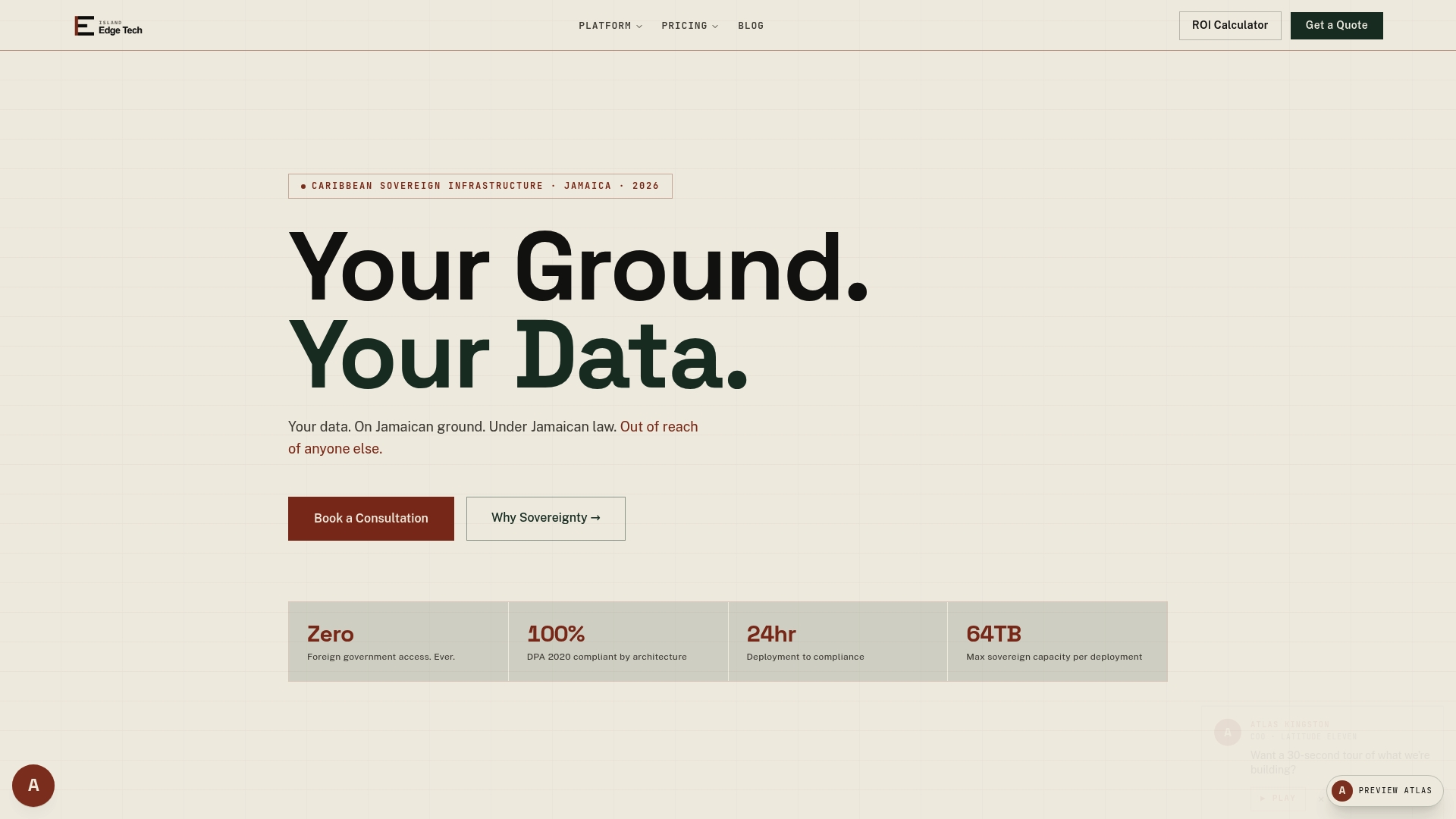
Islandedgetech addresses this directly. Its sovereign cloud platform keeps patient data on Jamaican soil, under Jamaican law, and fully aligned with the Data Protection Act 2020. Products including EdgePod and Abeng give healthcare organisations control over their data residency, incident response infrastructure, and compliance documentation without relying on foreign cloud services. For healthcare administrators seeking a compliance-ready infrastructure that supports DPA 2020 obligations and operational continuity, Islandedgetech offers a purpose-built solution for the Jamaican healthcare sector.
FAQ
What is the role of data protection in healthcare?
Data protection in healthcare is the practice of securing patient information to uphold privacy, satisfy regulatory requirements such as HIPAA and the DPA 2020, and maintain the integrity and availability of health data. It directly affects patient trust, regulatory standing, and operational continuity.
What are the penalties for HIPAA non-compliance?
Federal regulators collected over $6.6 million in HIPAA settlement fines during 2025, and penalties scale with the severity and duration of the violation. State laws can add further financial exposure, including private rights of action that HIPAA does not provide.
How does a healthcare data breach affect patient retention?
53% of patients switch providers after a data breach involving their personal information. Beyond the direct financial cost of a breach, the reputational damage creates long-term revenue loss that is difficult to recover.
What is federated learning and why does it matter for healthcare?
Federated learning allows AI models to be trained across multiple healthcare organisations without centralising raw patient data. It reduces privacy risk during model development while preserving the analytical value of distributed health datasets.
How does Jamaica's Data Protection Act 2020 affect healthcare providers?
The DPA 2020 requires healthcare organisations operating in Jamaica to implement proportionate security measures, restrict cross-border data transfers, and designate data controllers and processors with defined obligations. Non-compliance carries regulatory penalties and reputational risk comparable to HIPAA enforcement in the US context.